$ ./bin/crystal --version
Using compiled compiler at .build/crystal
Crystal 1.8.0-dev [58fb584cb87] (2023-01-21)

LLVM: 14.0.1
Default target: aarch64-apple-darwin21.6.0


| unless ARGV.size > 0 | |
| puts " Missing executable file argument" | |
| puts " Usage (in a Dockerfile)" | |
| puts " RUN crystal run ./path/to/list-deps.cr -- ./bin/executable" | |
| exit 1 | |
| end | |
| executable = File.expand_path(ARGV[0]) | |
| unless File.exists?(executable) |
$ ./bin/crystal --version
Using compiled compiler at .build/crystal
Crystal 1.8.0-dev [58fb584cb87] (2023-01-21)
LLVM: 14.0.1
Default target: aarch64-apple-darwin21.6.0
A Pen by Brian J. Cardiff on CodePen.
| require "compiler/crystal/**" | |
| class Object | |
| def dump_inspect(io, level) | |
| io << " " * level | |
| to_s(io) | |
| io << " :: " << self.class | |
| end | |
| end |
These configuration will let you use CodeLLDB extension to debug Crystal programs.
Store them as .vscode/tasks.json and .vscode/launch.json in your project.
When starting the debugging the current file will be built in the bin/ folder (as in shards build).
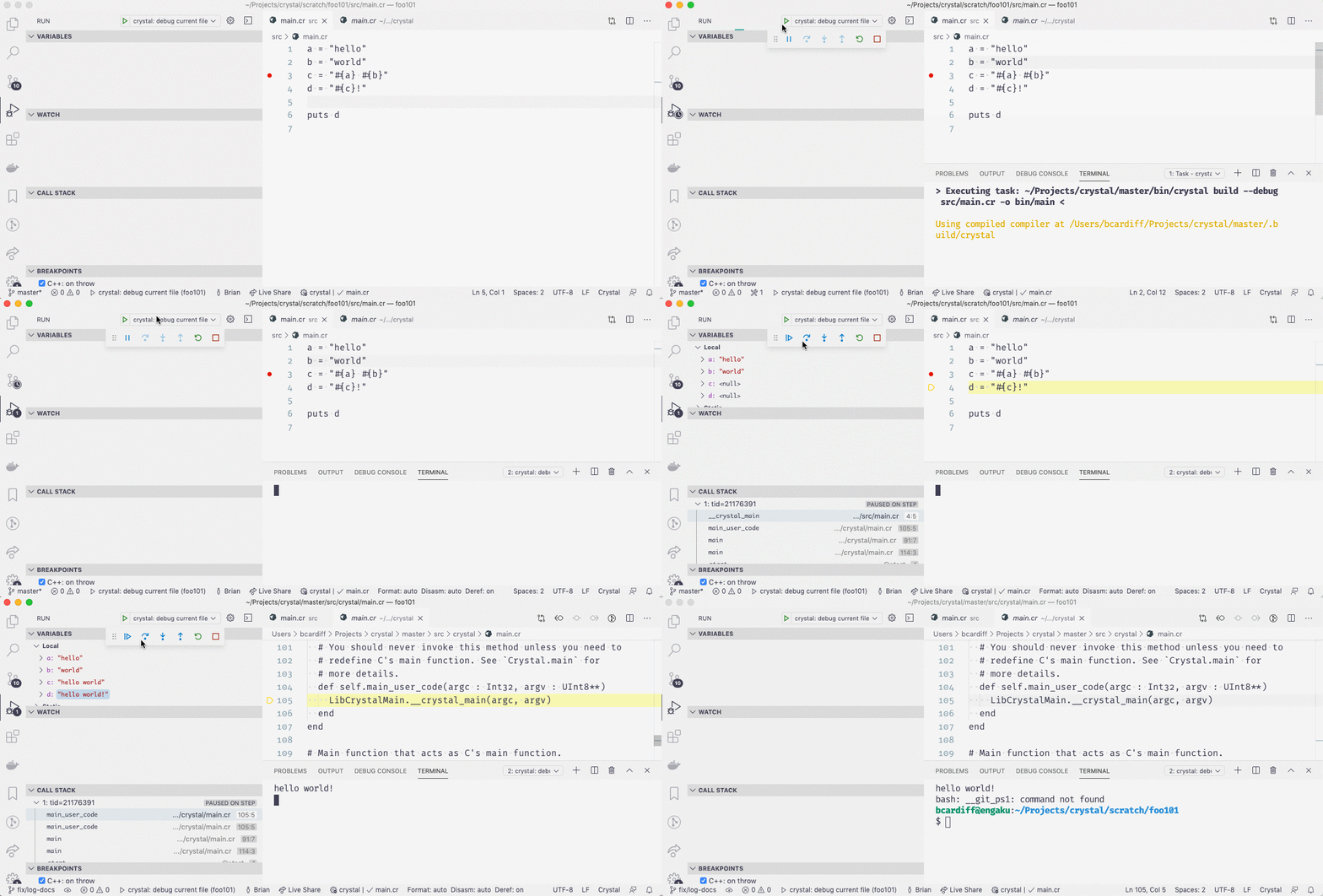
Note: You will need to set the crystal binary path in tasks.json "command" field and the whole path in launch.json "initCommands". Read more at #8538
| class ScopedCache | |
| attr_reader :name | |
| def initialize(cache, name, options = nil) | |
| @cache = cache | |
| @name = name | |
| @options = options | |
| end | |
| def read(key) |
| data = [{"Brian", 42}, {"Alan", 30}, {"Brian", 32}] | |
| # unstable | |
| data.sort_by &.[0] # => [{"Brian", 42}, {"Alan", 30}, {"Brian", 32}] | |
| # stable | |
| data.map_with_index { |d,i| {d,i} }.sort_by { |di| {di[0][0], di[1]} }.map { |di| di[0] } # => [{"Alan", 30}, {"Brian", 42}, {"Brian", 32}] |
| FROM ruby:2.2 | |
| RUN \ | |
| # node | |
| curl -sL https://deb.nodesource.com/setup_5.x | bash - && \ | |
| apt-get install -y nodejs && \ | |
| # cleanup | |
| apt-get clean && rm -rf /var/lib/apt/lists/* /tmp/* /var/tmp/* |
| # The lock is at the end of the unions | |
| # | |
| # CHECK: %"(Bool | Int32)" = type { i32, [1 x i64], i32 } | |
| local_var = uninitialized Int32 | Bool | |
| # After the alloca the lock is initialized as free (1) | |
| # | |
| # CHECK: %local_var = alloca %"(Bool | Int32)" | |
| # CHECK: %0 = getelementptr inbounds %"(Bool | Int32)", %"(Bool | Int32)"* %local_var, i32 0, i32 2 |