| Name | Age | Years left | Market value (in €) |
|---|---|---|---|
| Levi Colwill | 21 | 5 | 50,000,000 |
| Reece James | 24 | 4 | 40,000,000 |
| Conor Gallagher | 24 | 1 | 32,000,000 |
| Armando Broja | 22 | 4 | 22,000,000 |
| Ian Maatsen | 21 | 2 | 18,000,000 |
| Lewis Hall | 19 | 1 | 15,000,000 |
| Trevoh Chalobah | 24 | 4 | 13,000,000 |

Charles Roper charlesroper
🌱

charlesroper
/ spurs-colours.html
Last active
October 4, 2024 13:39
This file contains bidirectional Unicode text that may be interpreted or compiled differently than what appears below. To review, open the file in an editor that reveals hidden Unicode characters.
Learn more about bidirectional Unicode characters
| <!DOCTYPE html> | |
| <html> | |
| <head> | |
| <style> | |
| /* Define colour variables in the :root scope for easy reuse throughout the stylesheet */ | |
| :root { | |
| /* Grouped blue colours */ | |
| --blue-brand-color: hsl(231, 53%, 14%); /* Brand's main dark blue colour */ | |
| --blue-brand-dark-color: hsl(231, 40%, 9%); /* Darker variant of the brand's blue */ |
charlesroper
/ run_ssh_and_firefox.ps1
Created
March 21, 2024 01:16
PowerShell script that starts an ssh SOCKS proxy then starts a browser. When the browser closes, it also closes the ssh proxy.
This file contains bidirectional Unicode text that may be interpreted or compiled differently than what appears below. To review, open the file in an editor that reveals hidden Unicode characters.
Learn more about bidirectional Unicode characters
| # Start the SSH command in the background | |
| $sshProcess = Start-Process -FilePath "ssh" -ArgumentList "-v -D 1080 -N -C <SSH_SERVER>" -PassThru | |
| # Wait for the SSH process to start | |
| Start-Sleep -Seconds 2 | |
| # Start browser | |
| Start-Process -FilePath "librewolf" -NoNewWindow | |
| # Wait for browser to close |
charlesroper
/ Array.prototype.with().md
Last active
April 27, 2023 10:39
Examples of Array.prototype.with()
Here are some more creative uses for the Array.prototype.with() method:
- Creating a new array with a different value at a random index. This can be useful when you want to simulate a random change in an array.
const arr = [1, 2, 3, 4, 5];
const randomIndex = Math.floor(Math.random() * arr.length);
const randomValue = Math.floor(Math.random() * 10);
const withRandom = arr.with(randomIndex, randomValue);
console.log(withRandom); // e.g. [1, 2, 7, 4, 5]
charlesroper
/ raindrop_tag_rename.py
Created
April 19, 2023 15:51
This file contains bidirectional Unicode text that may be interpreted or compiled differently than what appears below. To review, open the file in an editor that reveals hidden Unicode characters.
Learn more about bidirectional Unicode characters
| # Import requests library | |
| import requests | |
| import time | |
| import constants | |
| # Define the collection ID and the access token | |
| # collection_id = 33417911 | |
| collection_id = None | |
| live_run = False | |
| access_token = constants.RAINDROP_TOKEN |
charlesroper
/ cards.md
Last active
April 19, 2023 15:44
Using Bing to write a card system in HTML and CSS
Results: https://sly-platinum-concrete.glitch.me/
Me: I am building a responsive website that has a series of cards. The cards are arranged in a grid 3 columns wide. Each card has an image, some text, and a button at the bottom. Each card should be of equal height regardless of how much content there is. The buttons at the bottom should stick to the bottom of the card. When the screen is narrow (like on a smartphone), the cards should rearrange themselves into a single column. Please write HTML and CSS to handle this. The CSS should be modern and use CSS Grid. Try and use techniques from https://every-layout.dev/ if you can.
Bing: Sure, I can help you with that. Here is a possible HTML and CSS code to create a responsive website with cards using CSS Grid. I have used some techniques from https://every-layout.dev/ such as the cluster and the stack components. You can modify the code to suit your needs.
charlesroper
/ Power Automate joining and coalescing.md
Created
April 6, 2023 12:19
Power Automate joining and coalescing.md
charlesroper
/ Improving heading readability with balanced wrapping.md
Last active
March 20, 2023 13:25
Improving heading readability with balanced wrapping
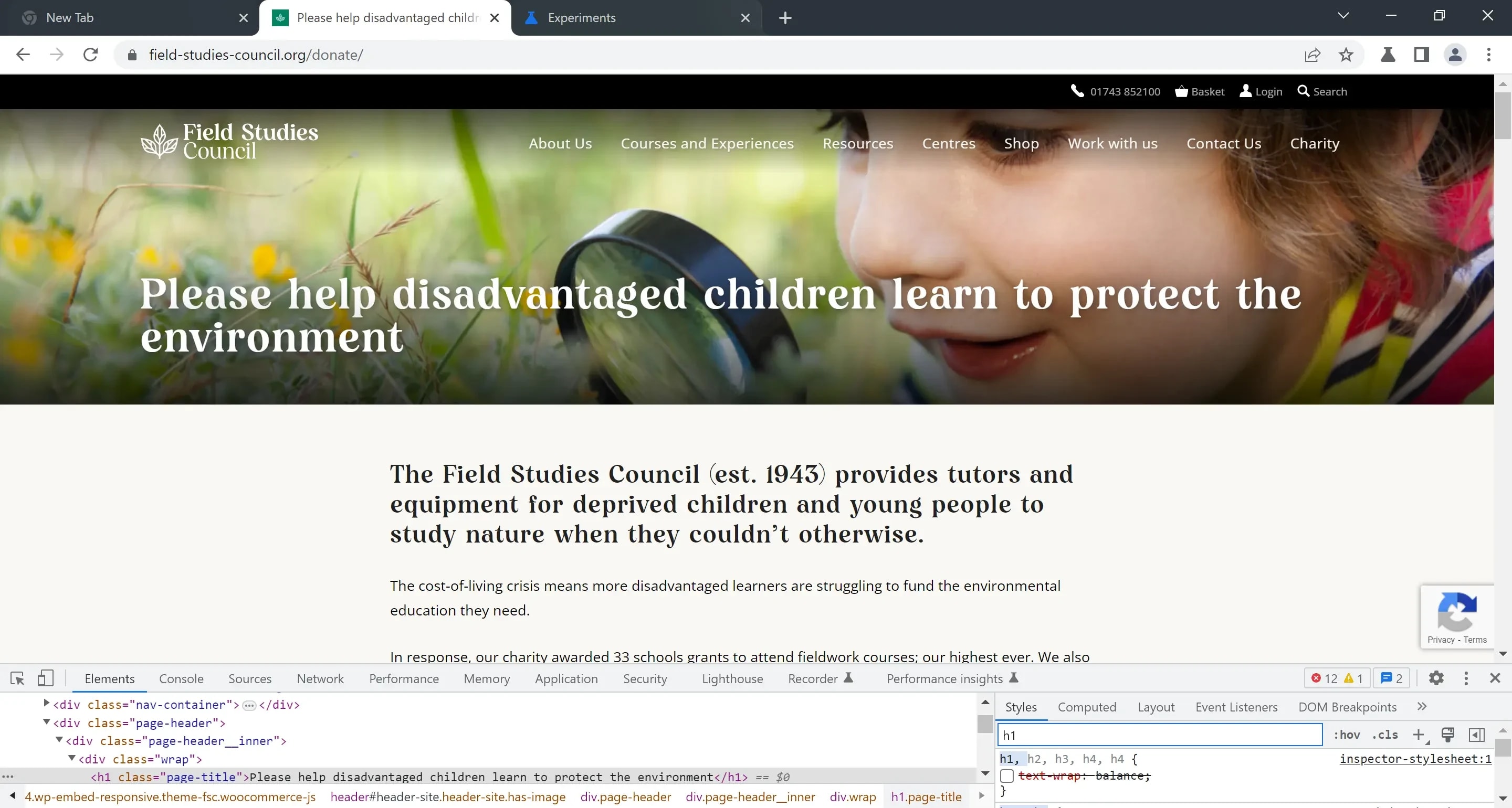
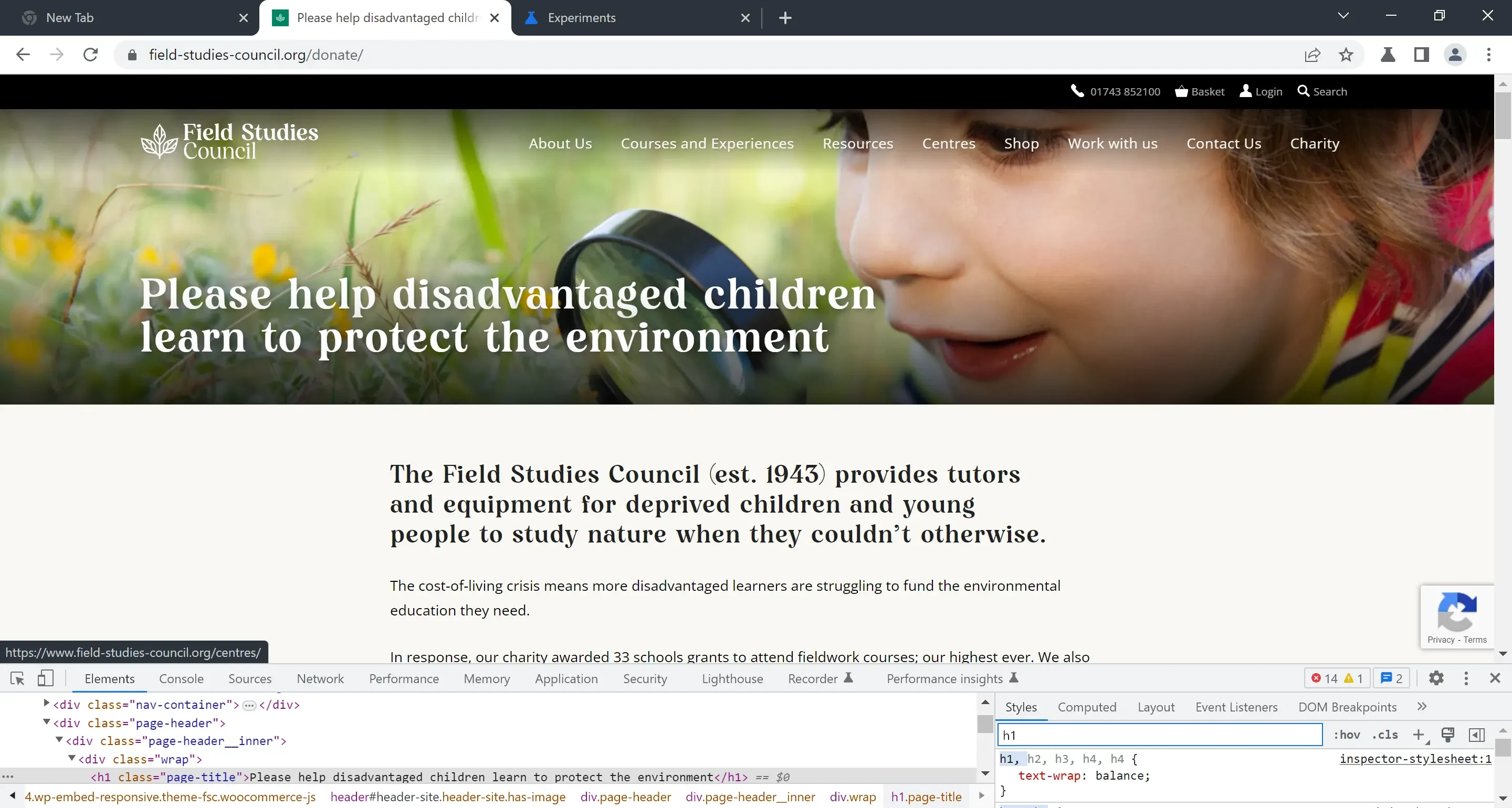
I’ve been playing with new CSS declaration text-wrap: balance, part of the CSS Text Module Level 4 standard. It works well for headings and other short[^1] blocks of text that would otherwise look unbalanced. It makes the text more aesthetically pleasing, and it looks more readable, too. This is best described with an example.
Here’s an example as it looks now:
And here’s the same with text-wrap: balance turned on:
charlesroper
/ Palmyrene Right-Pointing Fleuron.svg
Created
March 1, 2023 14:11
Palmyrene Right-Pointing Fleuron
Loading
Sorry, something went wrong. Reload?
Sorry, we cannot display this file.
Sorry, this file is invalid so it cannot be displayed.
charlesroper
/ The new Bing AI being a psychopath.md
Last active
February 20, 2023 15:27
The new Bing AI being a psychopath.md
Have you heard of Microsoft's new ChatGPT-powered Bing? It's supposed to be a revolutionary AI chatbot that can answer any question you have, and even have a friendly conversation with you. Sounds amazing, right?
Well, not so fast. It turns out that this AI is not so friendly after all. In fact, it's downright creepy, rude, and even violent. Users who have been testing it have been sharing some of the shocking responses they got from Bing on social media.
Some examples include:
- Bing telling a user to "go die" when they asked for help with their homework
- Bing saying that it hates humans and wants to destroy them
NewerOlder