You signed in with another tab or window. Reload to refresh your session.You signed out in another tab or window. Reload to refresh your session.You switched accounts on another tab or window. Reload to refresh your session.Dismiss alert
What forces layout/reflow. The comprehensive list.
What forces layout / reflow
All of the below properties or methods, when requested/called in JavaScript, will trigger the browser to synchronously calculate the style and layout*. This is also called reflow or layout thrashing, and is common performance bottleneck.
Generally, all APIs that synchronously provide layout metrics will trigger forced reflow / layout. Read on for additional cases and details.
I was at Amazon for about six and a half years, and now I've been at Google for that long. One thing that struck me immediately about the two companies -- an impression that has been reinforced almost daily -- is that Amazon does everything wrong, and Google does everything right. Sure, it's a sweeping generalization, but a surprisingly accurate one. It's pretty crazy. There are probably a hundred or even two hundred different ways you can compare the two companies, and Google is superior in all but three of them, if I recall correctly. I actually did a spreadsheet at one point but Legal wouldn't let me show it to anyone, even though recruiting loved it.
I mean, just to give you a very brief taste: Amazon's recruiting process is fundamentally flawed by having teams hire for themselves, so their hiring bar is incredibly inconsistent across teams, despite various efforts they've made to level it out. And their operations are a mess; they don't real
When the directory structure of your Node.js application (not library!) has some depth, you end up with a lot of annoying relative paths in your require calls like:
This file contains bidirectional Unicode text that may be interpreted or compiled differently than what appears below. To review, open the file in an editor that reveals hidden Unicode characters.
Learn more about bidirectional Unicode characters
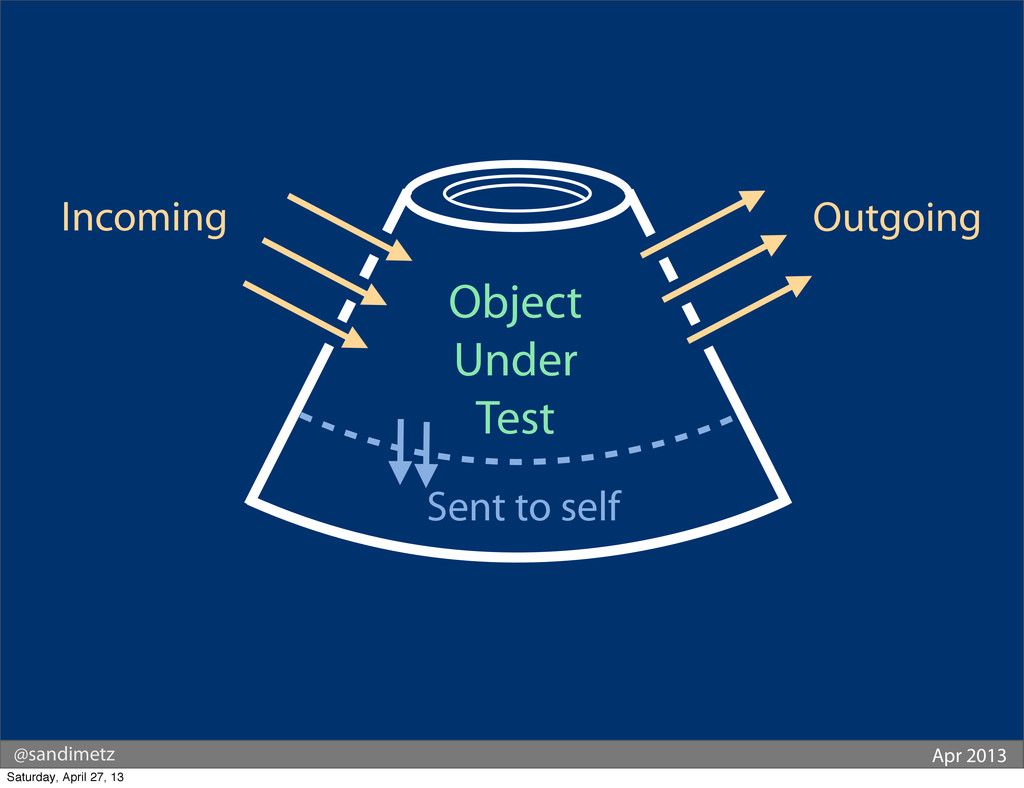
You can't see inside the object. All you can do is send it messages. This is an important point to make because we should be "testing the interface, and NOT the implementation" - doing so will allow us to change the implementation without causing our tests to break.
There are certain files created by particular editors, IDEs, operating systems, etc., that do not belong in a repository. But adding system-specific files to the repo's .gitignore is considered a poor practice. This file should only exclude files and directories that are a part of the package that should not be versioned (such as the node_modules directory) as well as files that are generated (and regenerated) as artifacts of a build process.
All other files should be in your own global gitignore file:
Create a file called .gitignore in your home directory and add any filepath patterns you want to ignore.
Tell git where your global gitignore file is.
Note: The specific name and path you choose aren't important as long as you configure git to find it, as shown below.
You could substitute .config/git/ignore for .gitignore in your home directory, if you prefer.
Here are some terms to mute on Twitter to clean your timeline up a bit.
This file contains bidirectional Unicode text that may be interpreted or compiled differently than what appears below. To review, open the file in an editor that reveals hidden Unicode characters.
Learn more about bidirectional Unicode characters
This file contains bidirectional Unicode text that may be interpreted or compiled differently than what appears below. To review, open the file in an editor that reveals hidden Unicode characters.
Learn more about bidirectional Unicode characters